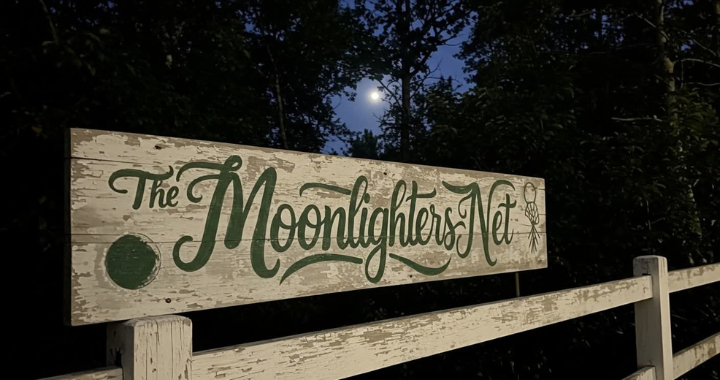
For many hams, the word “net” conjures up a very particular image: a tightly scripted roll call, the same announcements night after night, and a format that feels more like a checklist than a conversation. It is easy to assume that all nets are that way — useful, perhaps, but not especially personal or inviting. The reality is more complicated. In the right hands, a net can become something far richer: a regular gathering place, a training ground for new operators, a safety net when band conditions turn rough, and a doorway into friendships that last for decades.
It is also worth saying clearly that not all nets are — or should be — the same. Many offer their own “flavors,” each serving an important purpose in the hobby. Award and DX-focused nets help hams confirm QSOs and chase coveted certificates, while manufacturer-specific nets bring together operators of particular brands or models to share settings, modifications, and troubleshooting tips. Emergency service nets such as hurricane and severe-weather nets stand ready when normal infrastructure begins to fail, and countless hobby and interest nets keep everything from CW skills to satellite work alive and thriving. Those nets are special in their own right, and many of us who enjoy the Moonlighters are regular participants and supporters of those focused gatherings, too.
Against that backdrop, The Moonlighters Net on 40 meters has carved out a slightly different niche for more than forty years. Meeting seven nights a week, the Moonlighters have taken the familiar framework of a net and blended it with the easygoing spirit of a ragchew. Instead of limiting themselves to weather, traffic, or the latest contest activity, they range across almost every topic you hear on the bands: technical problems, station improvements, health updates, travel stories, classic cars, and a healthy dose of humor. For operators who find some nets impersonal or overly rigid, the Moonlighters offer something different — a dependable schedule paired with a friendly, conversational style.
Behind that relaxed tone is a well-run structure that keeps the net moving and makes large gatherings possible. Each session is guided by an experienced net control operator, supported by a dedicated logger using NetLogger and an organized team of relays east and west of the Mississippi. That coverage regularly brings more than forty check-ins on weeknights and upwards of eighty on Sundays, with stations checking in from the Midwest, Canada, the East Coast, and, when conditions cooperate, the West Coast and Western Canada. Even with those numbers, net control works hard to create a personalized QSO experience within the time available, especially for newer operators who may still be overcoming a touch of “mic fright.”
Sunday evenings showcase one of the net’s signature events: the Moonlighters Vintage Net, managed by Jon K1BCR. This special session celebrates radios from roughly 1995 and earlier, including both solid-state classics and glowing tube rigs. Two loggers work alongside net control, capturing each vintage check-in by rig and operator name, with the results posted weekly on the Moonlighters website and Facebook group. For many hams, seeing their station listed — along with the radios their friends are running — becomes a tangible reward for keeping older gear on the air and a testament to operating skills honed over many years. Newer licensees often discover vintage equipment through this net, and find themselves drawn into the warm glow of older technology.
Just as important as the content is the way the Moonlighters conduct themselves on the band. While the net has regular frequencies it favors, it does not “own” any frequency, nor does it expect other operators to move simply because a net is scheduled. If a frequency is already in use or a contest is underway, the Moonlighters will not step in and take over. In practice, 95 percent of stations are happy to accommodate a courteous request, but when they do not, the net moves, because the bands are to be shared, not claimed. That respect for other operators and other activities is part of the culture, and it reassures newcomers that they are joining a group that values good manners as much as good signals.
Ultimately, no single activity in amateur radio is right for everyone, and nets are no exception. Some hams will always prefer to tune and roam, dropping into random QSOs wherever the noise floor looks interesting. But for those who want a reliable place to check in, learn proper operating technique, gather practical information, and hear familiar voices night after night, a well-managed net can be exactly the right fit. The Moonlighters Net has proven, over four decades on 40 meters, that routine and ragchew can coexist. It offers structure without rigidity, history without nostalgia for its own sake, and a welcoming space for newly licensed hams, seasoned veterans, and less-mobile operators alike. In the process, it answers a simple question with real-world experience: Why join a net? Because, in the right company, a net becomes more than a schedule — it becomes a second home on the air.

M-F 7.272 Mhz 22:30 Z
Sat & Sun 7.275 Mhz 22:00 Z
